
Knee pain in children and teens is one of those things that can really catch parents off guard. Your child didn’t fall. There was no obvious accident. Nothing happened — and yet, there they are, limping after soccer practice or wincing when they climb the stairs. It can feel confusing, even a little alarming. The good news is that knee pain in young people without a clear injury is actually quite common, and in many cases, it’s something that can be well-managed with the right guidance. Here at Kingfisher Chiropractic in Bellingham, WA, Dr. Thomas Etue works with families every week to get to the root of these kinds of concerns and help kids move freely and comfortably again.
What does it mean when a child has knee pain without an injury?
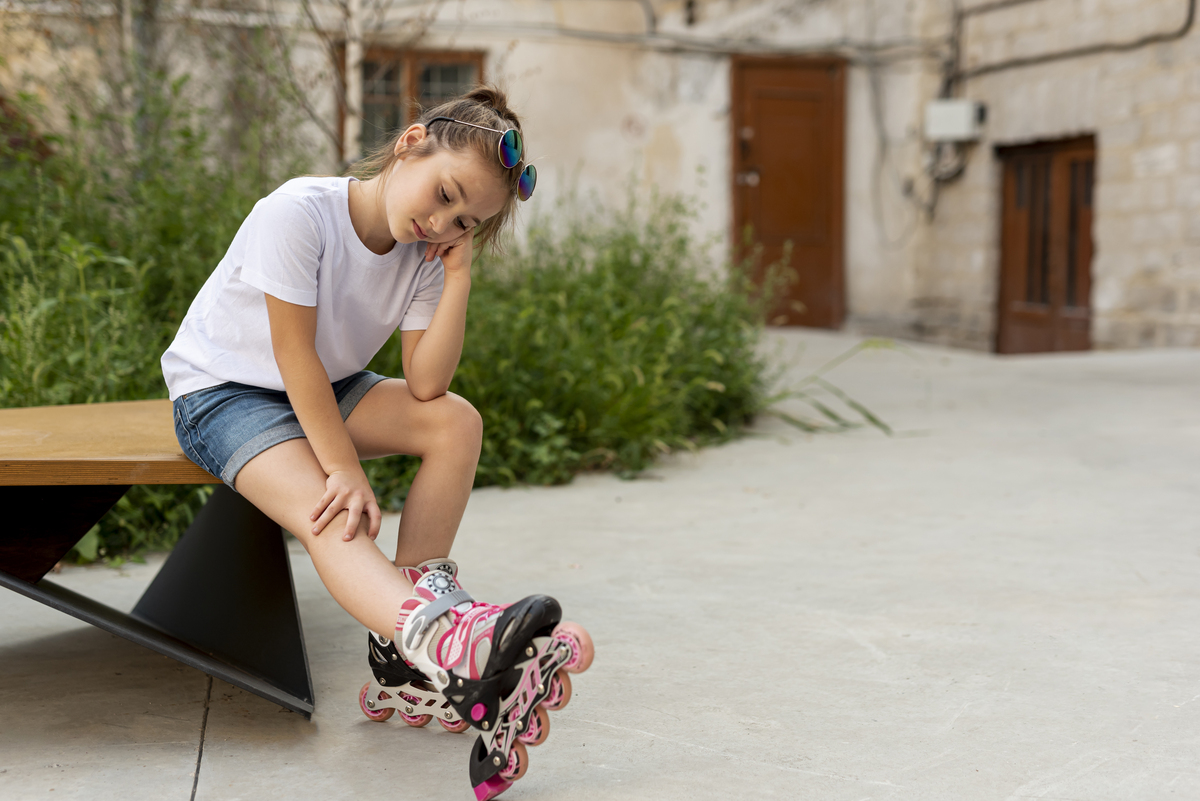
Knee pain that develops without a fall or direct trauma is often called non-traumatic knee pain. It typically results from growth-related changes, repetitive stress, muscle imbalances, or structural issues in how the body moves — not from a single accident. In growing children and adolescents, the bones, tendons, and muscles are all changing rapidly, which makes this age group especially vulnerable to this type of pain.
Why Kids Get Knee Pain Without a Clear Injury
It’s easy to assume that pain always requires a dramatic cause — a hard fall, a collision, a twisted ankle. But the human body, especially a growing one, doesn’t always work that way. Children and teenagers are in a constant state of physical change. Their bones are lengthening, their muscles are being asked to keep up, and their joints are under a different kind of stress than adult joints are.
When a child is active — playing sports, running around after school, riding bikes — those repetitive movements place load on the knee joint over and over again. If there’s a subtle imbalance in how the hip, pelvis, or foot functions, that load doesn’t get distributed the way it should. Over time, even small biomechanical inefficiencies can create real discomfort. This is especially true during growth spurts, when bones can temporarily grow faster than the soft tissues around them, creating tightness and tension in the areas where tendons attach to bone.
Here in Bellingham, WA, where kids are often active year-round — hiking, playing sports, biking the trails — it’s not uncommon for Dr. Thomas Etue to see young patients whose knee pain developed gradually, without anyone being able to point to a single moment when something went wrong. That gradual onset is actually a key clue that something functional, not traumatic, is at play.
Common Causes of Non-Traumatic Knee Pain in Young People
Understanding the most common reasons behind unexplained knee pain can help parents feel more informed and less anxious. Here are the conditions Dr. Thomas Etue most frequently sees in young patients at Kingfisher Chiropractic.
Osgood-Schlatter Disease
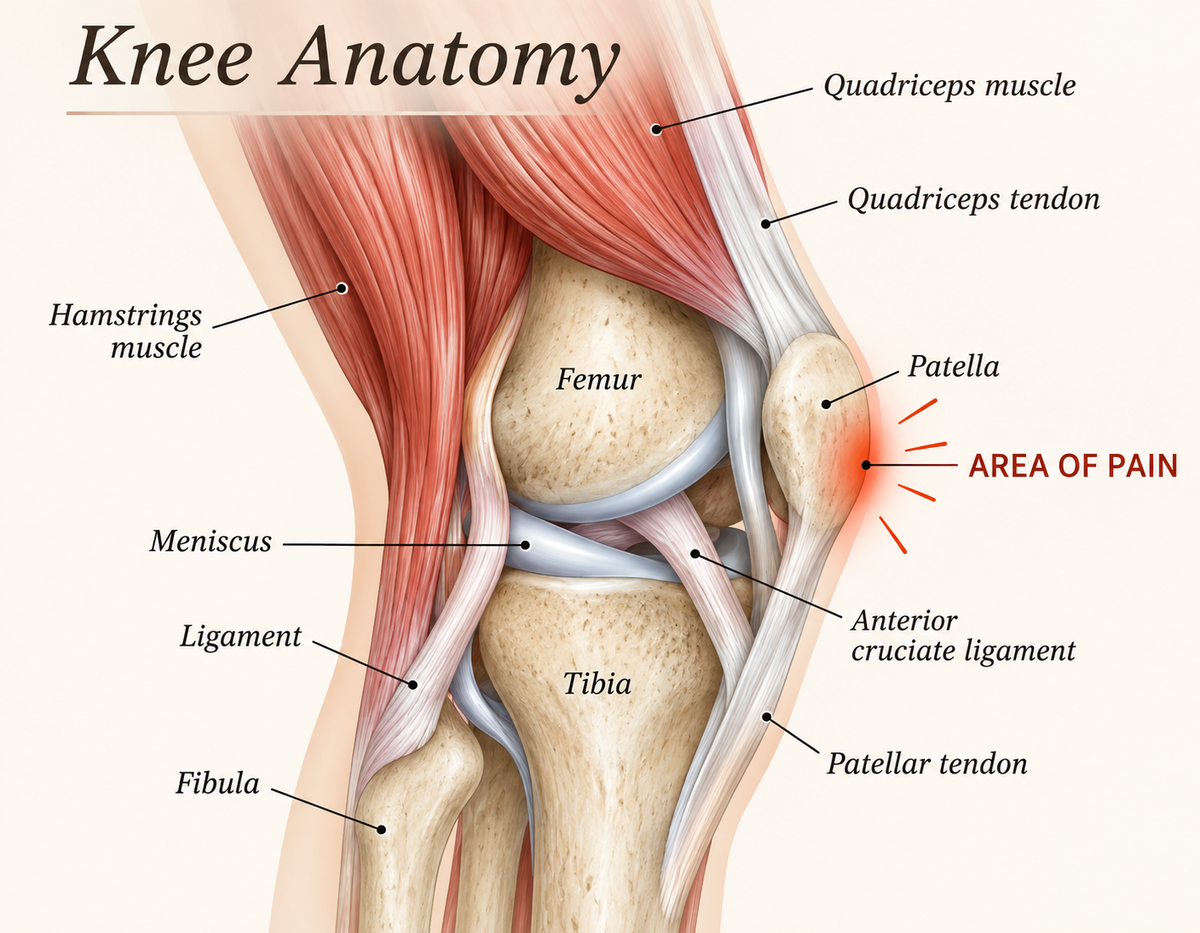
Despite the intimidating name, Osgood-Schlatter is a very common and manageable condition. It occurs when the patellar tendon — the tendon that connects the kneecap to the shinbone — repeatedly pulls on the growth plate at the top of the tibia. This creates inflammation and a tender, bony bump just below the kneecap. It’s especially common in active kids between the ages of 10 and 15, and it often flares up during growth spurts. The pain is usually felt at the front of the knee, just below the kneecap, and tends to worsen with activity.
Patellofemoral Pain Syndrome (Runner’s Knee)
This is a broad term for pain around or behind the kneecap. It often results from the kneecap not tracking smoothly in its groove as the knee bends and straightens. Weak hip muscles, tight quadriceps, flat feet, or poor movement patterns can all contribute. Young athletes — especially runners and those who play basketball or volleyball — are particularly prone to this. The ache tends to be dull and diffuse, and it often feels worse going down stairs or sitting for long periods.
Iliotibial Band Syndrome
The iliotibial (IT) band is a thick strip of connective tissue that runs along the outside of the thigh from the hip to the knee. When it becomes tight or irritated — often from repetitive movements like running or cycling — it can cause pain on the outer side of the knee. This is another condition that develops from overuse rather than injury, and it responds well to conservative care focused on restoring proper movement and reducing tension in the surrounding muscles.
Hypermobility and Joint Laxity
Some children are naturally more flexible than average. While flexibility is often seen as a good thing, excessive joint laxity (looseness) can mean the knee doesn’t have the stability it needs during movement. This can lead to aching, fatigue, and diffuse pain — especially after physical activity. These kids often don’t have a specific diagnosis, but their bodies are working harder to stabilize their joints, and that extra effort can cause discomfort over time.
Referred Pain From the Hip or Lower Back
Not all knee pain actually originates at the knee. The hip and lower back share neural and muscular connections with the knee, and dysfunction in those areas can sometimes express itself as knee symptoms. This is one reason why a thorough evaluation of the whole lower body — not just the knee itself — is so important in getting to the real source of the problem.
Signs and Symptoms Parents Should Know
Because there’s no obvious injury to point to, parents sometimes second-guess whether their child’s pain is “real” or worth addressing. Trust your instincts. If your child is consistently complaining about knee discomfort, changing how they move, or avoiding activities they used to enjoy, that’s meaningful information. Some signs to pay attention to include pain that worsens during or after physical activity, stiffness after sitting still for a while, a grinding or clicking sensation in the knee, visible swelling or warmth around the joint, and any noticeable change in the way your child walks or runs.
It’s also worth noting that children don’t always have the vocabulary to describe what they’re feeling. Younger kids especially may not say “my knee hurts” — they might just seem reluctant to participate in activities, or they may start limping without being able to explain why. Paying attention to behavioral changes can be just as telling as verbal complaints.
How Chiropractic Care Fits Into the Picture
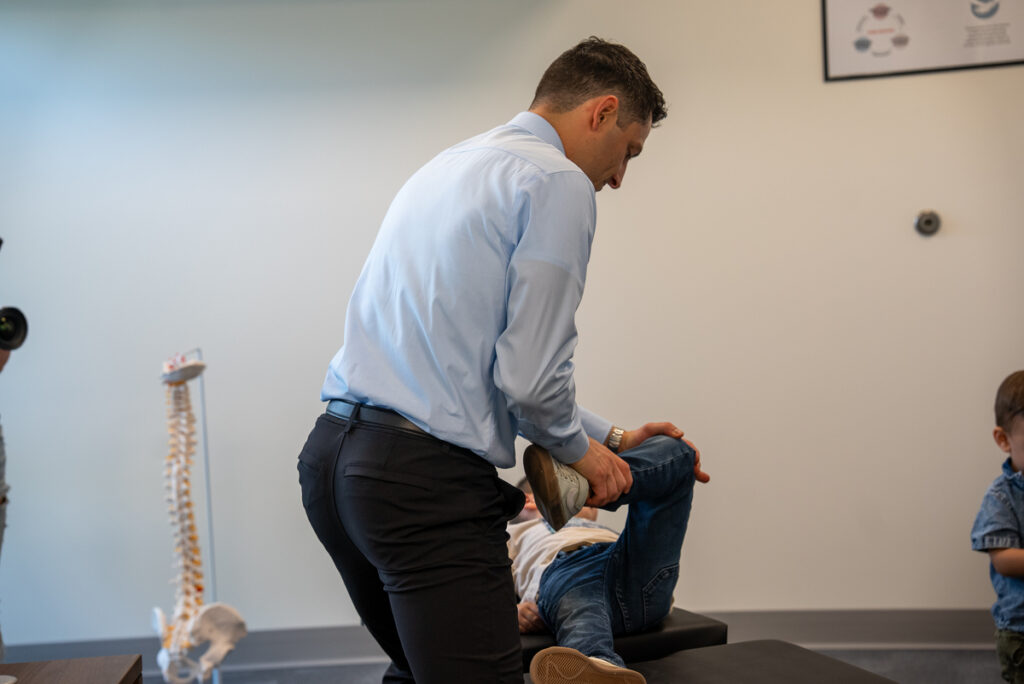
Chiropractic care offers a non-invasive, drug-free approach to understanding and addressing musculoskeletal pain — including knee pain in children and teens. At Kingfisher Chiropractic in Bellingham, WA, Dr. Thomas Etue takes a whole-body approach to evaluating young patients. Rather than focusing only on the knee, the assessment looks at how the feet, ankles, hips, pelvis, and spine are all functioning together. Because the body works as a connected system, imbalances anywhere in the kinetic chain can contribute to knee symptoms.
Chiropractic adjustments can help restore proper joint mobility in the hips, pelvis, and lower spine, which in turn can reduce the compensatory strain placed on the knee. Soft tissue work and myofascial techniques may help release tight muscles and tendons that are pulling on the knee joint. Gait analysis and movement pattern assessment can help identify the biomechanical root cause — so the care plan addresses the source of the problem, not just where the pain happens to show up.
Care at Kingfisher Chiropractic is always tailored to the individual patient. Children are not treated like small adults — the techniques used are gentle, age-appropriate, and designed to work with the body’s natural healing processes. Dr. Thomas Etue takes time to explain what he’s finding and what care might look like, so both parents and young patients feel informed and comfortable every step of the way.
Practical Tips to Support Your Child at Home
There’s a great deal you can do at home to support your child’s knee health between appointments and in everyday life. One of the most effective things is simply paying attention to activity load. If your child plays sports, alternating intense practice days with lighter movement days gives the body time to recover. Overtraining — especially during growth spurts — is one of the most common contributors to repetitive stress conditions like Osgood-Schlatter and patellofemoral pain.
Footwear matters more than most people realize. Worn-out shoes, or shoes that don’t provide adequate support for your child’s foot type, can alter the way force travels up through the ankle, knee, and hip with every step. If your child is spending a lot of time on hard surfaces, it’s worth checking that their footwear is still supportive and well-fitted.
Encouraging gentle movement rather than complete rest is also important. While rest may be appropriate during an acute flare, prolonged inactivity can actually weaken the muscles that support the knee and slow recovery. Light walking, swimming, or other low-impact activities are often more beneficial than complete immobilization. And of course — if you’re ever uncertain about what’s appropriate for your child specifically, Dr. Thomas Etue and the team at Kingfisher Chiropractic are always happy to help guide you.
When to See a Chiropractor for Your Child’s Knee Pain
If your child’s knee pain has lasted more than a week or two and isn’t clearly improving, it’s a good idea to have it evaluated by a professional. Catching biomechanical issues early can prevent them from becoming more entrenched patterns that are harder to address later. You don’t need to wait for the pain to become severe.
Some red flags do warrant prompt medical attention rather than — or in addition to — chiropractic care. These include significant swelling or redness that comes on suddenly, fever alongside joint pain (which can suggest infection or inflammatory disease), pain severe enough to prevent any weight-bearing, or pain that follows a traumatic event like a fall or direct impact. In these situations, it’s important to rule out fractures, infections, or inflammatory conditions with appropriate medical testing. Dr. Thomas Etue will always refer out when a situation calls for it — the goal is always the best outcome for the patient.
Common Causes at a Glance
|
Condition |
Typical Age Range |
Location of Pain |
Common Trigger |
|---|---|---|---|
|
Osgood-Schlatter Disease |
10–15 years |
Front of knee, below kneecap |
Growth spurts, repetitive running/jumping |
|
Patellofemoral Pain Syndrome |
10–18 years |
Around or behind kneecap |
Weak hips, poor tracking, overuse |
|
IT Band Syndrome |
12–18 years |
Outer side of knee |
Repetitive running or cycling |
|
Hypermobility-Related Pain |
Any age |
Diffuse, around entire joint |
Activity, fatigue, joint instability |
|
Referred Pain (Hip/Spine) |
Any age |
Variable, may feel deep |
Hip or spinal dysfunction |
Myths vs. Facts About Kids and Knee Pain
Myth: If there’s no injury, the pain isn’t serious.
Fact: Non-traumatic knee pain can be just as significant as injury-related pain. Conditions like Osgood-Schlatter and patellofemoral pain syndrome are real, documented conditions that deserve proper evaluation and care. Dismissing pain simply because there’s no obvious cause can lead to delayed treatment and longer recovery times.
Myth: Growing pains are just part of childhood and don’t need treatment.
Fact: While some aching associated with growth is normal, persistent or localized knee pain shouldn’t automatically be written off as “just growing pains.” True growing pains are typically felt in the muscle bellies of the legs at night and are bilateral. Pain that is consistent, localized to one area, or worsened by activity warrants a professional evaluation.
Myth: Rest is always the best solution.
Fact: Extended rest can actually be counterproductive in many cases of non-traumatic knee pain. Maintaining appropriate levels of movement helps preserve muscle strength and joint mobility, which are essential to recovery. The key is modifying activity intelligently — not stopping it entirely.
Myth: Chiropractic care is only for adults with back pain.
Fact: Chiropractic care is appropriate for people of all ages, including children and teenagers. The techniques used are adapted to be gentle and suitable for younger patients. Many families in Bellingham, WA bring their kids to Kingfisher Chiropractic specifically for musculoskeletal concerns like knee pain, postural issues, and sports-related discomfort.
Myth: Knee pain in kids will always go away on its own.
Fact: Some conditions do resolve with time and activity modification. But others — particularly those rooted in biomechanical imbalances — can persist or worsen without proper care. Getting an early evaluation helps determine which category your child’s situation falls into, so you can take the most effective path forward.
Final Thoughts From Kingfisher Chiropractic
If your child is dealing with knee pain and you can’t trace it back to a specific injury, you’re not alone — and you don’t have to just wait and hope it goes away. Here at Kingfisher Chiropractic in Bellingham, WA, Dr. Thomas Etue genuinely enjoys working with kids and teens. There’s something really rewarding about helping a young person get back to doing what they love — whether that’s playing on the school soccer team, hiking with the family, or simply walking to school without wincing.
A thorough evaluation can make all the difference. Understanding the root cause of your child’s knee pain means you’re not just managing symptoms — you’re actually addressing what’s driving them. That’s a better outcome for everyone. The Bellingham community is one we care deeply about, and supporting local families in staying healthy, active, and comfortable is at the heart of what we do at Kingfisher Chiropractic. Don’t hesitate to reach out — we’d love to help your family find answers and get your child moving well again.
Frequently Asked Questions
Can a chiropractor really help with my child’s knee pain?
Yes, chiropractic care can be a very effective part of managing non-traumatic knee pain in children and teens. By assessing the whole body — including the hips, pelvis, and spine — Dr. Thomas Etue can identify biomechanical contributors to knee pain that might be missed in a narrower evaluation. Care is always adapted to be gentle and appropriate for younger patients.
How do I know if my child’s knee pain is serious?
Knee pain that is persistent, worsens over time, involves significant swelling, or is accompanied by fever should be evaluated promptly. Pain that follows a fall or direct trauma also warrants immediate attention. For gradual-onset pain without these red flags, a chiropractic evaluation is a great starting point to understand what’s going on.
Is it safe for children to receive chiropractic adjustments?
Chiropractic care is widely considered safe for children when provided by a qualified practitioner. Techniques are modified to be gentle and appropriate for the patient’s age and size. Many families in Bellingham, WA regularly bring their children to Kingfisher Chiropractic for a range of musculoskeletal concerns.
Should my child stop all sports if their knee is hurting?
Not necessarily. Complete rest is not always the best approach, and maintaining appropriate movement can actually support recovery. The right answer depends on the specific condition and severity, which is why a professional evaluation is important. Dr. Thomas Etue can help develop activity guidelines that make sense for your child’s situation.
At what age can knee pain like Osgood-Schlatter develop?
Osgood-Schlatter most commonly affects children between the ages of 10 and 15, typically during or just after a growth spurt. It tends to be more common in physically active kids. With appropriate management, most young people recover fully before reaching adulthood.
What should I expect at a first visit for my child’s knee pain at Kingfisher Chiropractic?
At the first visit, Dr. Thomas Etue will take a detailed health history and perform a thorough physical assessment that includes the knee as well as the surrounding structures. He’ll explain what he finds in clear, understandable terms and discuss what a care plan might look like — so you and your child both know exactly what to expect going forward.
TL;DR Summary
-
Knee pain in children without a clear injury is common and often caused by growth-related stress, muscle imbalances, or repetitive movement patterns — not a single traumatic event.
-
Conditions like Osgood-Schlatter disease, patellofemoral pain syndrome, and IT band syndrome are frequent culprits in young, active patients.
-
Chiropractic care addresses the whole body — not just the knee — to identify and treat the root cause of pain rather than just managing symptoms.
-
Parents can support their child at home through appropriate activity modification, proper footwear, and maintaining gentle movement during recovery.
-
If your child’s knee pain has lasted more than a week or two, or is affecting daily activities, a professional evaluation at Kingfisher Chiropractic in Bellingham, WA is a sensible, non-invasive first step.


